

Introduction
Understanding Autumn Consumer Behaviour in South Africa
Seasonal Stock Planning: Adjusting Inventory for Autumn
Strategic Merchandising for Seasonal Visibility
Preparing Your Supply Chain for Seasonal Demand
Using Autumn Promotions to Drive Basket Size
Preparing the Store Environment for Seasonal Comfort
Staff Readiness for Seasonal Sales
Practical Tips for Autumn Retail Preparation
Common Mistakes FMCG Retailers Make During Seasonal Changes
Frequently Asked Questions (FAQs)
Preparing an FMCG retail store for autumn in South Africa requires a focused shift in merchandising, inventory planning, and customer engagement. As temperatures begin to drop and seasonal consumer behaviour changes, retailers should adjust product ranges, improve in-store visibility for seasonal items, and strengthen supply chain coordination. Autumn preparation allows FMCG stores to increase basket size, avoid stock shortages, and position themselves competitively before winter demand peaks.
Introduction
Seasonal transitions influence consumer buying behaviour in predictable ways. In South Africa, the move from summer into autumn typically begins in March and runs through May, bringing cooler evenings, shorter days, and gradual changes in household consumption patterns. For FMCG retailers, this shift presents both operational challenges and commercial opportunities.
Store owners who anticipate seasonal demand tend to outperform those who react only once the weather changes. Autumn preparation affects stock planning, merchandising, promotions, and supplier coordination. It also affects working capital, shelf space allocation, and the mix of essential household goods carried by independent retailers.
For independent FMCG store owners, particularly members of Elite Star Trading (EST), a voluntary buying group serving independent retailers across Southern Africa, seasonal preparation is also about leveraging group buying power, supplier relationships, and shared market insights.
Retailers that use these advantages effectively can increase turnover during seasonal transitions while maintaining healthy margins.
This article explains how FMCG retailers can prepare their stores for autumn in South Africa using practical retail strategies grounded in real-world store operations.
Understanding Autumn Consumer Behaviour in South Africa
Autumn changes consumer purchasing habits because households begin preparing for colder weather, indoor living, and seasonal illnesses.
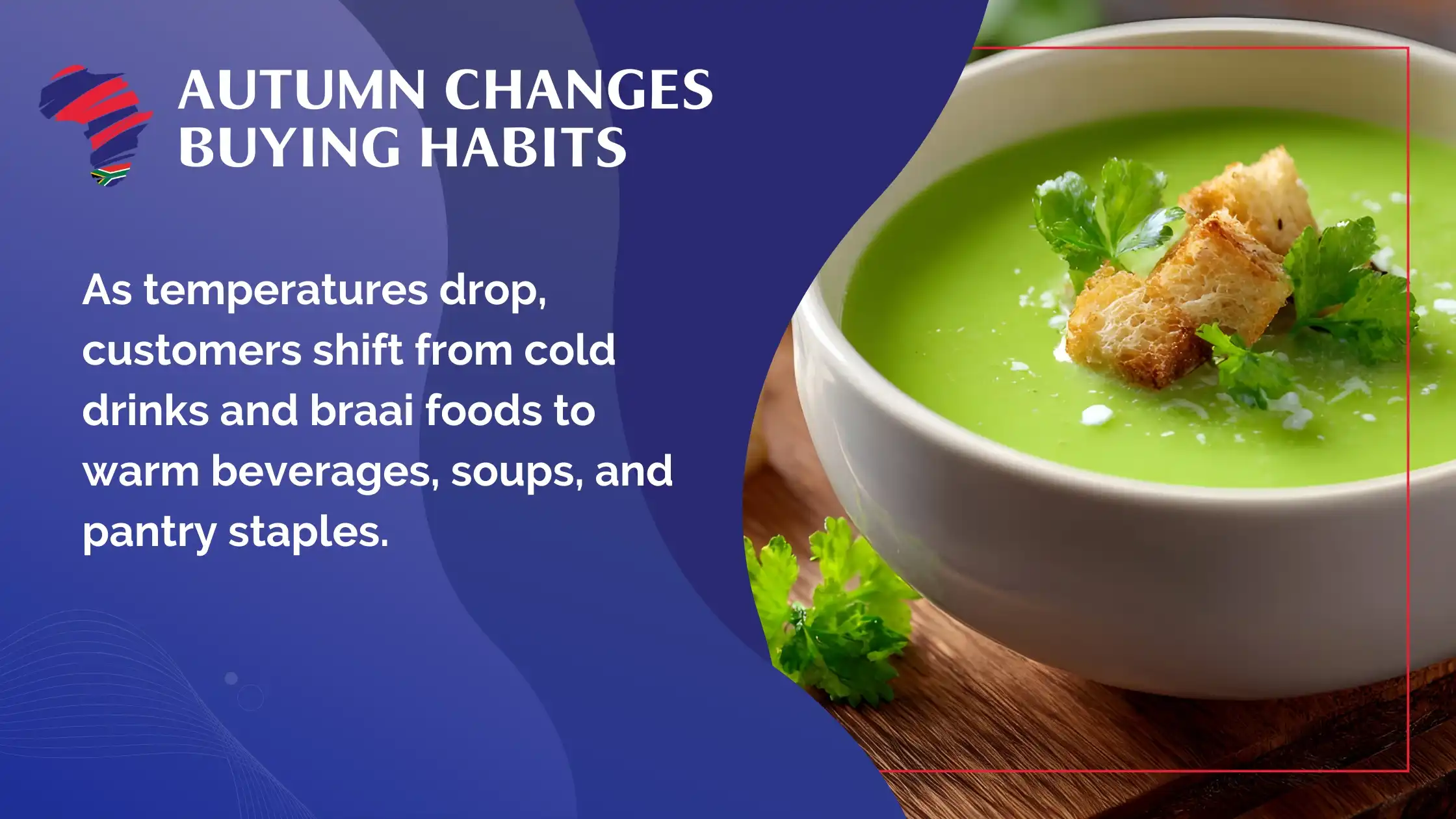
During summer, consumers prioritise products such as cold beverages, braai foods, ice creams, and outdoor leisure items. As autumn approaches, spending gradually shifts toward warming foods, pantry staples, health products, and home comfort items.
Several consumption trends typically emerge during the autumn transition:
- Increased demand for hot beverages
- Higher sales of soups, instant meals, and cooking ingredients
- Growth in cold and flu medication purchases
- Rising demand for household cleaning products
- Increased purchases of staple pantry items
Independent retailers often notice basket composition changes before total foot traffic changes. Customers may still visit stores at similar frequency, but the products they choose shift toward comfort and practicality.
Expert Insight
Retailers who monitor basket composition weekly can identify seasonal shifts early. Adjusting shelf visibility and ordering cycles based on these changes allows stores to stay ahead of consumer demand.
Seasonal Stock Planning: Adjusting Inventory for Autumn
Autumn preparation begins with reviewing product categories that typically increase in demand as temperatures drop.
Inventory planning requires balancing three priorities:
- Avoiding stockouts
- Preventing excess inventory
- Maximising shelf productivity
Independent FMCG retailers often operate with limited storage capacity, which makes accurate seasonal forecasting particularly important.
Key Product Categories That Grow in Autumn
Hot Beverages
Hot beverages become significantly more popular as temperatures drop.
Common high-performing products include:
- Coffee
- Tea
- Instant hot drinks
- Drinking chocolate
Retailers should ensure strong availability across both premium and value brands, as consumer purchasing power varies across neighbourhoods.
Soup and Instant Meals
Packaged soup and quick meal solutions tend to increase in popularity during autumn.
Consumers often look for:
- Instant soup sachets
- Cup soups
- Stock cubes
- Ready-made sauces
These products appeal to households looking for quick, affordable meals during cooler evenings.
Cold and Flu Medication
Autumn is the beginning of the respiratory illness season in many parts of South Africa.
Pharmacy and health aisles should prioritise:
- Cold and flu remedies
- Vitamin supplements
- Immune support products
- Tissues and throat lozenges
Retailers should coordinate with suppliers to ensure consistent availability.
According to this SOUTH AFRICAN COUGH, COLD AND FLU MARKET INSIGHTS BROCHURE by INSIGHT SURVEY,
“The demand for cold and flu remedies in South Africa increases significantly during autumn (beginning around April) and peaks throughout the winter months (May to August), driven by the onset of the traditional influenza season and rising respiratory infections. This surge leads to a strong, consistent increase in the sales of over-the-counter (OTC) medication, particularly as consumers seek fast-acting, all-in-one, and immune-boosting solutions.”
Comfort Food Staples
Staple food items often see increased demand as households cook more meals at home.
Examples include:
- Rice
- Pasta
- Maize meal
- Canned foods
- Baking ingredients
Retailers should review historical sales data to identify patterns from previous autumn seasons.
Strategic Merchandising for Seasonal Visibility
Seasonal success in FMCG retail depends heavily on visibility.
Products that align with the season should be easy for customers to find. If autumn-related products are hidden within normal shelf layouts, customers may not notice them.
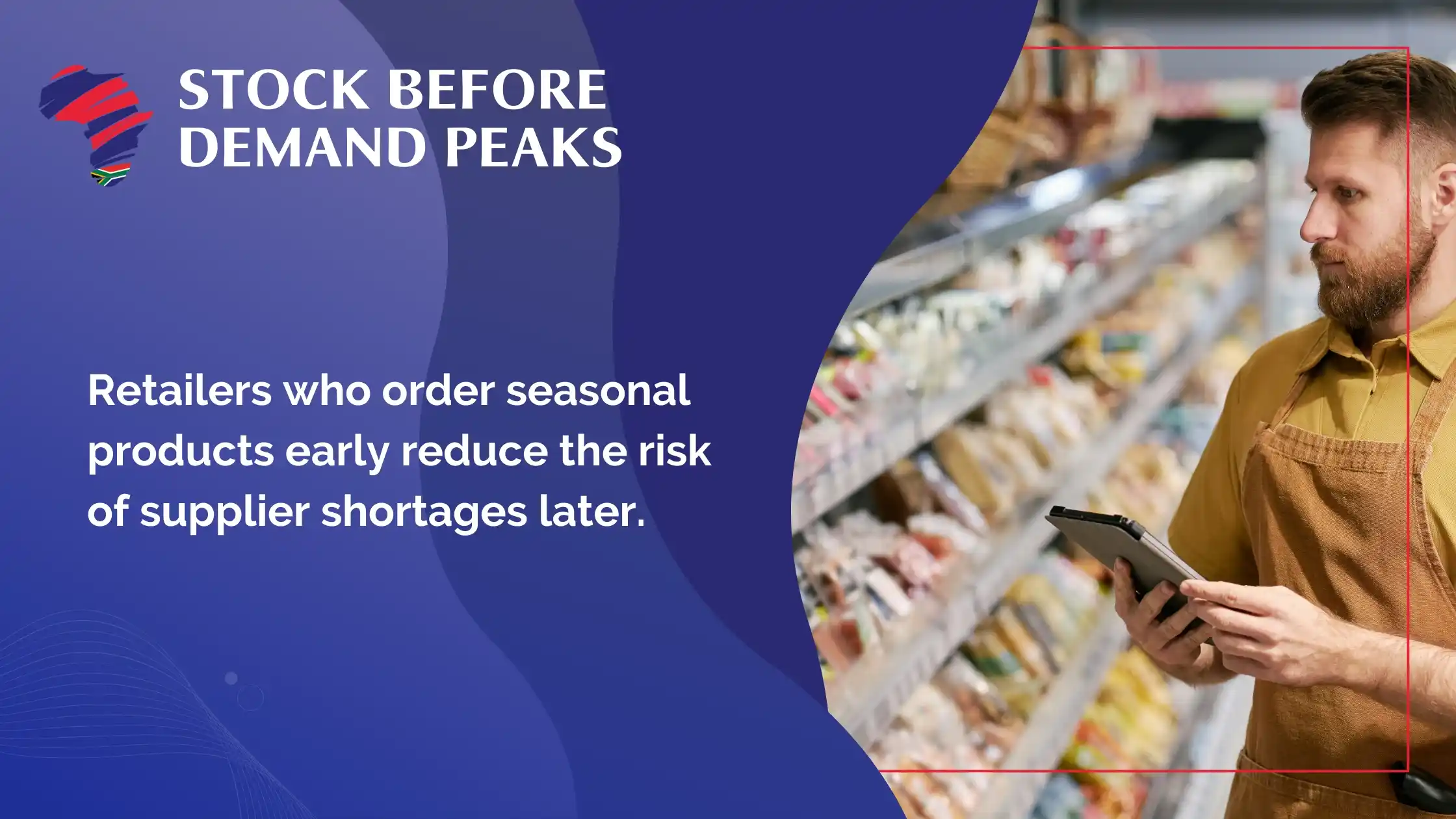
Merchandising strategies that work particularly well include:
- Seasonal end-of-aisle displays
- Themed product groupings
- Promotional bulk stacks
- Cross-merchandising
Example: Autumn Comfort Display
A simple seasonal display might combine:
- Soup sachets
- Instant noodles
- Stock cubes
- Bread
- Margarine
- Coffee and tea
Grouping these products together increases basket size by encouraging customers to purchase complementary items.
Practical Tip
Create a small “Autumn Essentials” section near the store entrance. Customers entering the store will immediately see relevant seasonal products.
Preparing Your Supply Chain for Seasonal Demand
Supply chain coordination becomes more important during seasonal shifts.
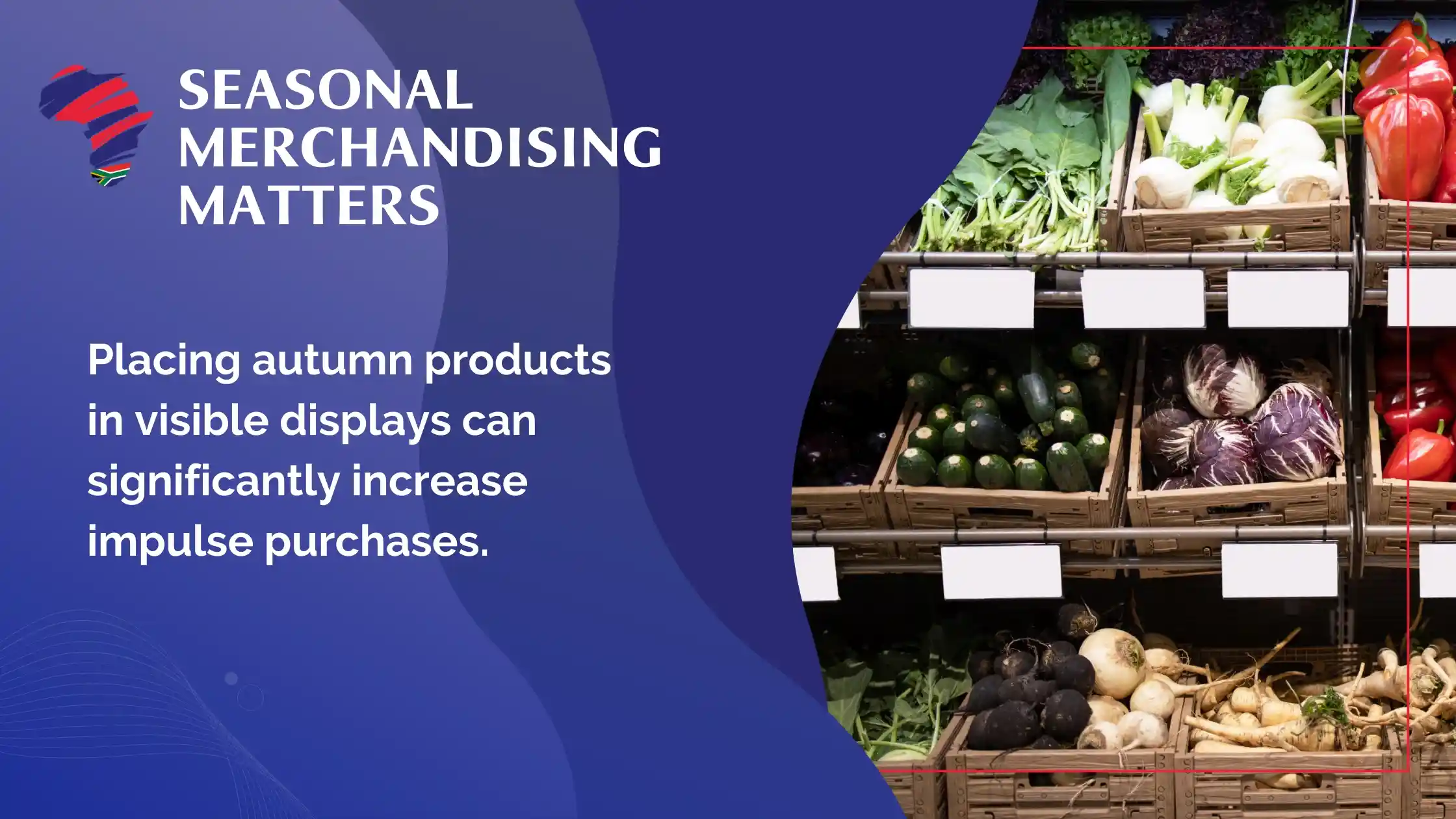
Retailers that order reactively often face supplier stock shortages once demand peaks. This risk increases during winter months when many stores are restocking the same products simultaneously.
Proactive retailers reduce this risk by:
- Reviewing seasonal sales data
- Ordering earlier
- Increasing safety stock levels for key items
The Role of Buying Groups
Voluntary buying groups such as Elite Star Trading (EST) provide independent retailers with advantages during seasonal procurement.
These advantages often include:
- Negotiated supplier pricing
- Consolidated purchasing power
- Access to promotional deals
- Shared retail insights
For many independent stores, buying group membership improves seasonal readiness because supply risks are reduced.
For more information on joining EST, click here to Contact us.
Using Autumn Promotions to Drive Basket Size
Seasonal promotions are an effective way to encourage higher spending per visit.
Instead of focusing only on price discounts, retailers should consider bundle-based promotions that encourage multi-item purchases.
Example Promotion Concepts
Soup Night Bundle
- Soup sachets
- Bread
- Margarine
Winter Prep Bundle
- Coffee
- Biscuits
- Sugar
Bundles simplify purchasing decisions for customers and increase average basket value.
Expert Insight
Bundle promotions work well in neighbourhood FMCG stores because customers often shop with specific meal plans in mind.
Preparing the Store Environment for Seasonal Comfort
Store presentation also affects customer perception during seasonal transitions.
A well-maintained store creates a sense of trust and reliability.
Autumn preparation should include:
- Ensuring store lighting remains warm and welcoming
- Improving shelf organisation
- Refreshing promotional signage
- Cleaning and maintaining refrigeration units
Retailers should also review entrance displays, as these are the first point of visual engagement for customers.
Staff Readiness for Seasonal Sales
Retail staff play a critical role in seasonal product awareness.
Employees who understand seasonal trends can guide customers toward relevant products.
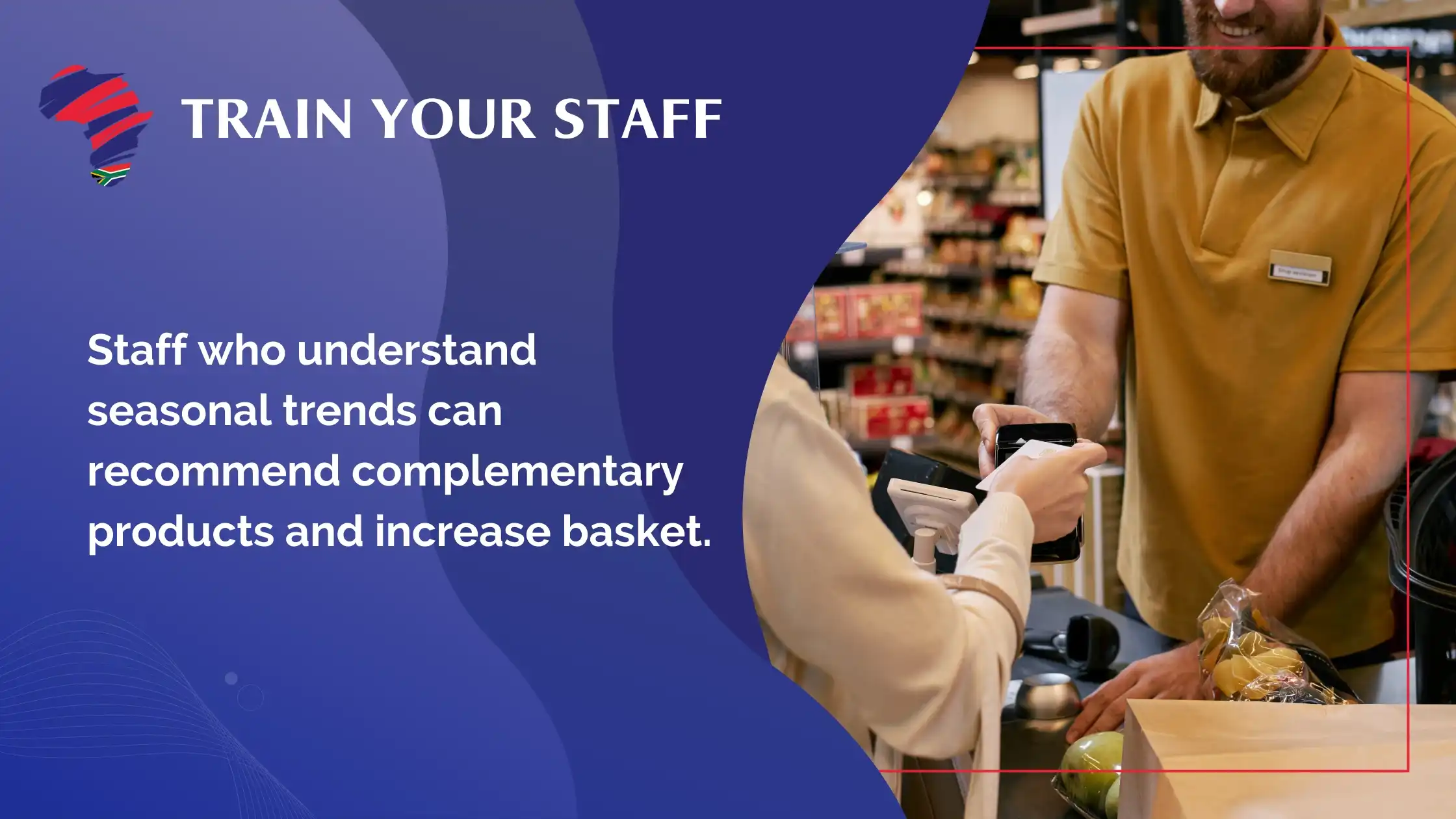
Staff preparation may include:
- Short product knowledge briefings
- Informing staff about seasonal promotions
- Encouraging upselling suggestions
Example:
If a customer buys coffee, staff can suggest biscuits or rusks as complementary items.
Best Practice
Hold a short 10-minute weekly briefing during seasonal transitions to update staff on product focus areas.
Practical Tips for Autumn Retail Preparation
Review Last Year’s Sales Data
Identify which product categories increased in demand during the previous autumn.
Increase Safety Stock
Ensure adequate inventory of high-demand items such as hot beverages and soup.
Refresh In-Store Displays
Seasonal displays improve product visibility and encourage impulse purchases.
Introduce Bundle Promotions
Group complementary products together to increase basket size.
Engage Suppliers Early
Confirm product availability before demand peaks.
Train Store Staff
Ensure employees understand seasonal product priorities.
Common Mistakes FMCG Retailers Make During Seasonal Changes
Waiting Until Demand Peaks
Retailers who delay ordering may experience stock shortages.
Ignoring Merchandising
Seasonal products that are poorly displayed often underperform.
Overstocking Slow-Moving Items
Not every product increases in demand during autumn.
Failing to Track Sales Patterns
Historical sales data is one of the most reliable indicators of seasonal demand.
Poor Supplier Coordination
Late orders may lead to supply disruptions.
Key Takeaways
- Autumn preparation allows FMCG retailers to respond to seasonal demand changes before winter.
- Consumer behaviour shifts toward warm beverages, comfort foods, and health products.
- Strategic merchandising improves visibility and encourages larger basket sizes.
- Early inventory planning reduces stockout risks.
- Voluntary buying groups such as Elite Star Trading (EST) can support independent retailers through supplier relationships and procurement advantages.
- Staff training and in-store promotions enhance seasonal sales performance.
Frequently Asked Questions
When should FMCG retailers start preparing for autumn in South Africa?
Preparation should ideally begin in late February or early March before seasonal demand shifts become visible in store sales.
Which products sell most during autumn in South Africa?
Hot beverages, soups, pantry staples, and cold and flu medication often see increased demand.
Why is seasonal merchandising important in FMCG retail?
Seasonal merchandising improves product visibility and encourages impulse purchases.
How can independent retailers compete with large supermarket chains?
Independent stores often compete by offering convenience, personalised service, and carefully curated product ranges.
What is a voluntary buying group?
A voluntary buying group is an organisation that allows independent retailers to combine purchasing power in order to negotiate better supplier terms.
How does EST support FMCG retailers?
Elite Star Trading (EST) supports independent retailers through supplier partnerships, procurement benefits, and shared industry expertise.
Click here to find out more about the EST – FMCG division.
Should small retailers increase stock levels for seasonal changes?
Retailers should increase stock only for categories with proven seasonal demand.
What is the biggest mistake stores make when preparing for winter?
Waiting until demand increases before adjusting stock levels.
How can retailers increase basket size during autumn?
Bundle promotions and cross-merchandising often encourage customers to purchase complementary products.
Disclaimer
This article provides general retail insights based on industry observations and operational experience. Retail performance may vary depending on location, store size, and local consumer demographics. Store owners should review their own sales data and supplier agreements when planning seasonal strategies.