
Introduction
Independent Retailers Can Understand a Local Market in Greater Detail
Faster Decisions Can Create a Real Competitive Advantage
Personal Service Builds Loyalty That Is Difficult to Standardise
Specialist Knowledge Can Outperform a Larger Product Range
Convenience Is Often Local, Practical and Personal
Community Connection Must Be Genuine
Quick Answer
Independent retailers can compete successfully with large chains by using advantages that scale cannot easily reproduce: local knowledge, faster decision-making, personal service, specialist expertise and ranges shaped around a particular community. The strongest independents combine these qualities with disciplined pricing, reliable stock availability, professional marketing and the collective buying power of a voluntary buying group such as Elite Star Trading (EST).
Introduction
A national retail chain arrives with obvious strengths. It has substantial buying power, recognised branding, large advertising budgets, sophisticated systems and the ability to spread operating costs across many branches.
For an independent retailer, that can appear intimidating. Yet scale does not decide every purchase. Customers also care about convenience, trust, product availability, useful advice, exceptional service, and how well a store understands local needs. These are areas in which a well-run independent business can outperform a much larger competitor.
The opportunity remains commercially significant. Statistics South Africa reported that retail trade sales at constant 2019 prices grew by 2.6% YOY in 2025. General dealers recorded annual growth of 2.4%, while hardware, paint and glass retailers grew by 4% during the fourth quarter of 2025 compared with the same period in 2024. These figures describe broad categories rather than independent retailers specifically, but they confirm that both general retail and hardware remain important parts of South Africa’s economy. Statistics South Africa: Retail Trade Sales, December 2025
Elite Star Trading (EST) is a South African co-operative buying group established in 2007. Through its FMCG and Building & Hardware divisions, EST helps independent retailers strengthen their market position while retaining ownership and operational control of their businesses.
The question, then, is not whether a local store can match a chain in every area. It is where the independent has a genuine advantage – and how that advantage can be converted into sustainable sales and profit.
Independent Retailers Can Understand a Local Market in Greater Detail
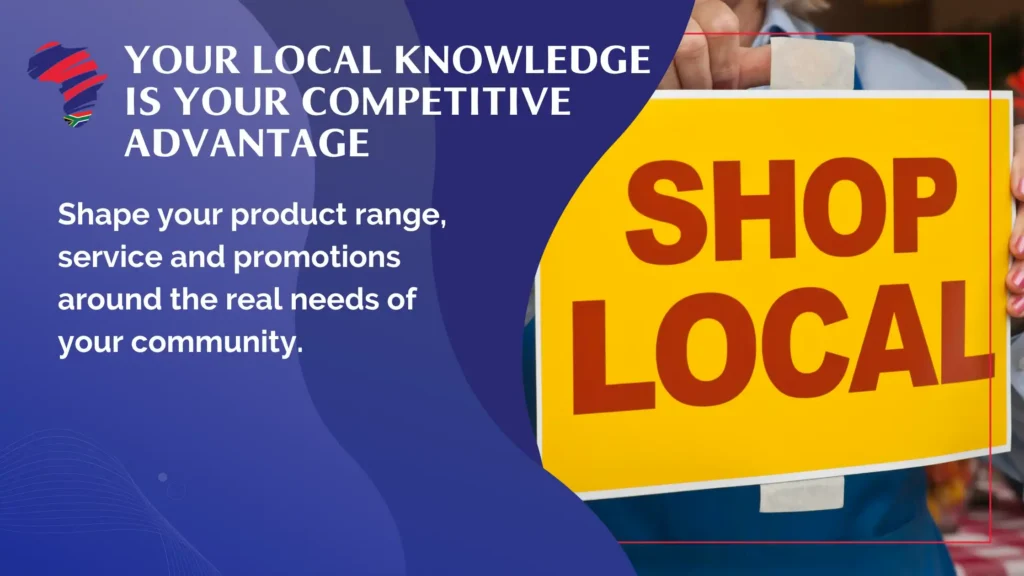
Local knowledge is one of the independent retailer’s most valuable commercial assets. An owner-managed store can shape its range, service and promotions around the behaviour of a specific community instead of relying solely on a national formula.
A retailer in a farming district may need to carry products that would receive little shelf space in an urban branch. A neighbourhood supermarket might observe strong demand for particular pack sizes, culturally relevant ingredients or brands preferred by local families. A hardware store serving contractors will require a different stockholding strategy from one serving weekend DIY customers.
This knowledge should come from several sources:
- Point-of-sale data
- Customer requests
- Staff observations
- Seasonal sales patterns
- Contractor and business-account enquiries
- Local events, weather and economic activity
- Products customers regularly seek elsewhere
The local advantage becomes commercially useful when observation is converted into decisions. A customer asking for an unavailable product is providing range information. Repeated requests reveal a possible gap; one isolated request does not necessarily justify a new line.
Expert Insight: Local knowledge should be tested against sales data. Personal instinct is valuable, but it becomes considerably stronger when supported by category performance, stock-turn and margin information.
For a closer examination of community-based ranging, read How to Align Your Store’s FMCG Range with Your Local Community.
Faster Decisions Can Create a Real Competitive Advantage
Independent retailers can often make local decisions faster than businesses governed by centralised procedures. This agility matters when demand changes suddenly, a nearby development creates new opportunities or a competitor leaves a gap in the market.
A store owner may be able to introduce a requested line, adjust an order, approve a local delivery or create a targeted promotion without waiting for several layers of authorisation. That speed is particularly useful in Southern African markets, where customer needs, transport conditions, weather, community events and local economic activity can vary sharply between regions.
Speed should not become impulsiveness. Every change still needs a commercial reason, an accountable decision-maker and a way to measure the outcome.
Practical Tip: Test a new product or service on a limited scale. Set a review date and measure sales, margin, stock-turn and customer response before committing substantial working capital.
Personal Service Builds Loyalty That Is Difficult to Standardise
Independent stores can make customers feel recognised, understood and supported. Chains can deliver efficient service, but it is harder to reproduce relationships built over years between store owners, staff, contractors, families and local businesses.
In hardware retail, personal service might mean helping a customer calculate quantities, identify compatible products or avoid purchasing the wrong item. In FMCG, it may involve sourcing a requested brand, preparing a regular order for a small business or understanding the shopping patterns of local households.
Good relationships have practical business value. They can encourage repeat visits, referrals and honest feedback. They may also reduce the customer’s need to compare every purchase purely on price.
Personal service cannot depend only on the owner. Staff need product knowledge, authority within reasonable limits and clear service standards. A friendly employee who gives unreliable advice can damage trust just as quickly as an indifferent one.
Best Practice: Record recurring requests and service problems. Customer familiarity should be supported by a simple system so useful information does not disappear when a staff member is absent.
Specialist Knowledge Can Outperform a Larger Product Range
Independent retailers do not always need the widest range. They need the right range, supported by people who understand it.
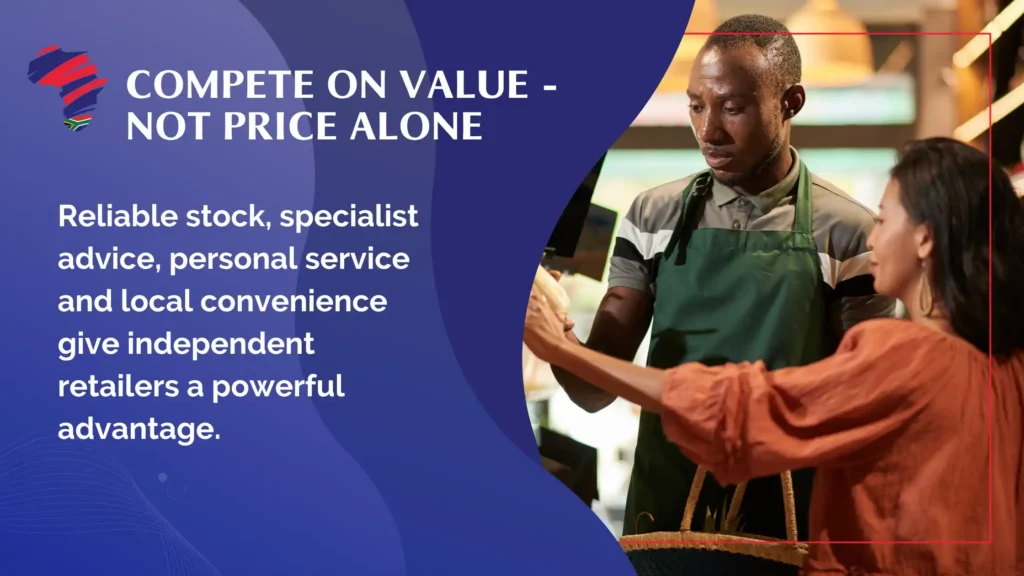
A specialist hardware retailer may offer stronger guidance on paint systems, waterproofing, plumbing components or building materials than a general merchandise chain. An independent FMCG retailer may understand local brands, traditional ingredients, catering requirements or business customers better than a nationally standardised supermarket.
Expertise reduces purchasing risk for the customer. This matters when choosing the wrong product could waste money, delay a project or produce a poor result. Knowledge also creates natural opportunities to sell complete solutions rather than isolated products.
For example, a customer buying paint may also need preparation materials, applicators and guidance on coverage. A food-service customer purchasing a core ingredient may require a dependable supply schedule and appropriate pack sizes. In both cases, the retailer creates value through understanding, not pressure.
Staff training is therefore a sales investment. Supplier demonstrations, product updates, reference material and regular category discussions help turn knowledge into a consistent store capability.
Convenience Is Often Local, Practical and Personal
Convenience is not limited to a sophisticated app or a nationwide delivery network. For many customers, convenience means finding the correct product nearby, receiving a quick response on WhatsApp, placing a telephonic order or arranging a practical local delivery.
An independent store can design convenience around the way its community actually shops. Useful options may include:
- Accurate trading hours online
- Orders placed through WhatsApp
- Local delivery
- Click-and-collect or call-and-collect
- Prepared contractor or business orders
- Quick sourcing of unusual products
- Clear directions and parking information
- Fast confirmation of stock availability
South African customers may face transport costs, limited time or long distances between retail centres. A nearby store with dependable stock and responsive service can therefore provide greater practical value than a larger retailer located further away.
Convenience must be operationally sound. Promising delivery without planning routes and costs, or advertising WhatsApp ordering without responding promptly, creates frustration instead of loyalty.
Independent Retail Does Not Mean Competing on Price Alone
Price matters, particularly in value-conscious markets. However, trying to undercut a national chain on every line is unlikely to be sustainable.
A stronger approach is to identify known-value items (KVI) – products customers frequently compare – and keep those prices market-relevant. The retailer can then manage gross profit across the wider basket, taking account of product role, competition, service costs, stockholding and customer demand.
This requires accurate costing. Freight, handling, delivery, shrinkage, rebates and promotional contributions can all affect the real result. Turnover without adequate gross profit leaves the business busy but financially vulnerable.
Independent stores should communicate the full value of the offer:
- Correct products in stock
- Knowledgeable assistance
- Faster local service
- Smaller or locally relevant pack sizes
- Delivery or order preparation
- Easier access to decision-makers
- Reliable after-sales support
Price benchmarking remains essential. It should inform a deliberate pricing strategy rather than trigger automatic discounting.
For detailed guidance, see Gross Profit, RSPs and Market Benchmarking: A Guide for Independent Hardware Stores.
Professional Standards Strengthen the Local Advantage
Being local is not an excuse for looking informal or outdated. Customers compare independent businesses with the best retail experiences available, including national chains and online stores.
A competitive independent store should maintain:
- Clean, logical merchandising
- Visible and accurate pricing
- Consistent branding
- Helpful signage
- Reliable stock records
- Fast checkout processes
- Current contact information
- Professional complaint handling
- A credible website or landing page
- An accurate Google Business Profile
- Active, well-managed social media pages
The physical and digital store must tell the same story. A retailer may provide exceptional face-to-face service, but an outdated website or unanswered online enquiry can prevent a new customer from experiencing it.
The Marketing Starter Pack for Hardware Retail Stores in South Africa provides a practical foundation for improving digital visibility and local marketing.
Community Connection Must Be Genuine
Independent retailers can occupy a meaningful place in local economic and social life. They employ local people, work with nearby trades and businesses, support schools or clubs, and often know the challenges facing their customers.
Community involvement works best when it grows from a real relationship rather than a once-off publicity exercise. A hardware store could support a local improvement project or host a practical demonstration. An FMCG retailer might assist a feeding initiative, school event or local supplier showcase.
These activities increase visibility, but their greater value lies in trust and familiarity. Customers can see that the retailer participates in the same local economy they do.
The business case still requires discipline. Community support should have a sensible budget, clear purpose and alignment with the store’s values and customer base.
Data Makes Local Instinct More Reliable
An independent store’s closeness to its customers produces useful information, but that information needs structure. Even a basic weekly dashboard can improve buying, ranging and promotional decisions.
Retailers should monitor:
- Sales and gross profit by category
- Fast- and slow-moving stock
- Stock days and stock-turn
- Out-of-stocks on key lines
- Aged inventory
- Promotional performance
- Average basket value
- Customer requests
- Returns, complaints and shrinkage
- Sales by customer type, where appropriate
A slow-moving product is not automatically a poor product. It may be seasonal, strategically necessary or valuable to a particular trade customer. Equally, a fast-selling line is not automatically profitable. Sales velocity, margin and the item’s role in the overall basket must be considered together.
Further guidance is available in Essential Tips for Managing Building & Hardware Inventory Efficiently.
How a Voluntary Buying Group Strengthens Independence
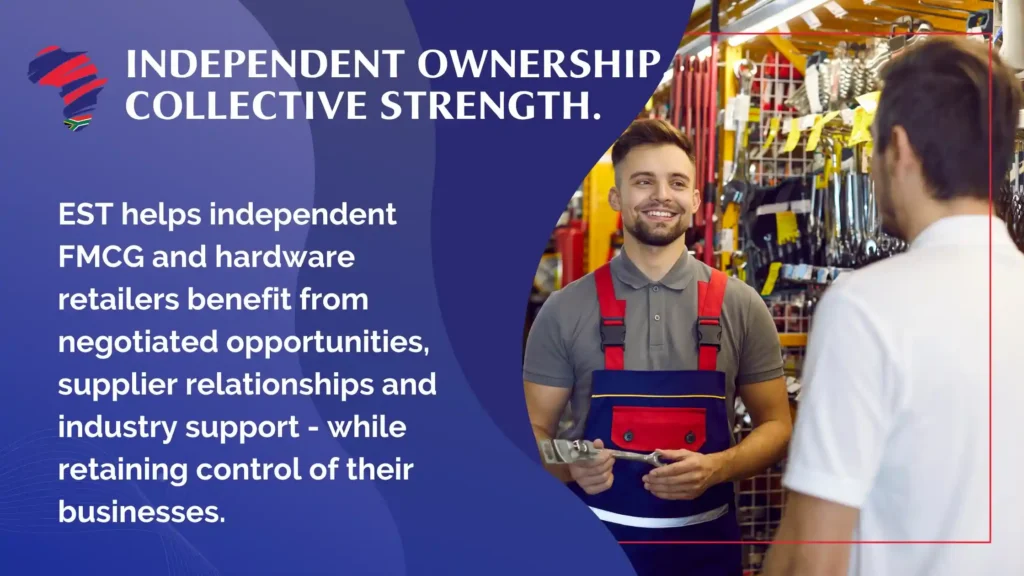
A voluntary buying group helps independent retailers combine local ownership with some of the commercial benefits normally associated with scale. This can include negotiated supplier opportunities, broader industry relationships, promotional activity, market intelligence and networking.
The importance of collective buying structures is recognised in the South African retail landscape. The Competition Commission’s Grocery Retail Market Inquiry examined buyer groups, supplier relationships, buyer power and the competitiveness of small and independent retailers as significant features of the grocery sector. Competition Commission: Grocery Retail Market Inquiry Final Report
EST members remain independently owned and operated. According to EST’s published information, retailers manage their own supplier accounts, credit facilities, orders and business decisions while benefiting from the group’s negotiated opportunities and support structures.
This balance is valuable. Collective strength can help address part of the scale gap, while local owners retain the freedom to shape their stores around their own markets.
EST membership or contact page
Practical Tips for Building the Independent Retail Advantage
Tip 1: Define the customers you serve best
Identify your most valuable customer groups and understand what each expects from your store.
Tip 2: Protect availability on key lines
A competitive price has little value when the product is repeatedly out of stock.
Tip 3: Record customer requests
Keep a simple request log and review it monthly for genuine ranging opportunities.
Tip 4: Train staff by category
Give employees enough knowledge to answer common questions accurately and recommend complete solutions.
Tip 5: Benchmark visible prices
Regularly compare key items while protecting gross profit across the full basket.
Tip 6: Make local ordering easy
Use channels customers already understand, but set response-time, payment and delivery procedures.
Tip 7: Audit the digital shopfront
Check store hours, contact details, photographs, reviews and social media responsiveness.
Tip 8: Measure promotions properly
Assess incremental sales, gross profit and leftover stock rather than judging success by turnover alone.
Common Mistakes Independent Retailers Should Avoid
Assuming Loyalty Will Continue Automatically
Long-standing customers still expect competitive prices, dependable stock and professional service. History creates goodwill, but it does not replace ongoing performance.
Carrying Too Much Stock “Just in Case”
An excessively broad range ties up working capital and increases the risk of aged stock. A focused, locally relevant assortment usually produces a stronger return.
Discounting Without Calculating the Effect on Gross Profit
A promotion may grow turnover while weakening the cash contribution needed to cover expenses. Calculate the required sales uplift before reducing a price.
Keeping Customer Knowledge in the Owner’s Head
Information should be shared through request logs, account notes, staff meetings and sales reports. The business becomes vulnerable when one person holds all the relationships and knowledge.
Neglecting the Store’s Online Presence
Incorrect hours, old photographs or unanswered messages undermine credibility. Digital housekeeping is now part of basic store management.
Trying to Imitate a Chain
A smaller retailer loses its distinction when it copies a national format without considering local needs. Professionalism should be borrowed; unnecessary bureaucracy should not.
Key Takeaways
- Independent retailers compete most effectively through local relevance, speed, service, expertise and convenience.
- Local knowledge delivers results when it is supported by sales and stock data.
- Price competitiveness matters, but permanent price-cutting is not a sustainable strategy.
- A focused range with dependable availability can outperform a larger but poorly matched assortment.
- Professional physical and digital presentation reinforces customer trust.
- Community relationships should be authentic, consistent and commercially responsible.
- Staff knowledge must extend beyond the owner.
- A voluntary buying group can provide collective commercial strength without removing local ownership and decision-making.
- EST helps independent FMCG and hardware retailers remain locally responsive while benefiting from wider supplier relationships, negotiated opportunities and industry support.
Frequently Asked Questions
- Can an independent retailer genuinely compete with a national chain?
Yes. An independent retailer can compete by serving a defined local market exceptionally well. Product relevance, reliable availability, specialist advice, convenience and personal service can outweigh scale in many purchasing decisions.
- What is the greatest advantage of an independent store?
Its closest defensible advantage is detailed knowledge of local customers. That knowledge allows the store to adapt its range, service and communication faster than a standardised national operation.
- Do independent retailers have to be cheaper than chains?
No. They should remain market-relevant on visible and frequently compared items, but competing solely on price can undermine gross profit. Customers also assess availability, convenience, advice and service.
- How can a local retailer improve its buying power?
Joining a reputable voluntary buying group may provide access to negotiated supplier opportunities, promotions, industry relationships and shared market knowledge. Membership terms and commercial obligations should be assessed carefully.
- What is a voluntary buying group?
A voluntary buying group brings independent retailers together to create collective commercial strength while allowing member stores to remain independently owned and managed. The specific structure and services vary between groups.
- How can independent retailers use customer knowledge responsibly?
Retailers should combine informal feedback with sales records, request logs and category analysis. Any collection or use of personal information must comply with applicable privacy and data-protection requirements.
- Should a small independent store offer online shopping?
A full e-commerce operation is not always necessary. Accurate online information, WhatsApp enquiries, stock confirmation, order collection and local delivery may address the most immediate customer needs at a manageable cost.
- How often should a retailer review its product range?
Core ranges should be reviewed regularly, with faster-moving categories assessed more frequently. Seasonal demand, stock-turn, margin, customer requests and aged inventory should guide the timing.
- How can an independent hardware store stand out?
Strong technical knowledge, dependable core stock, complete-project selling, contractor support, sourcing assistance and local delivery can create meaningful differentiation.
- How can an independent FMCG retailer stand out?
A locally relevant range, suitable pack sizes, convenient access, dependable essentials, responsive service and an understanding of community shopping patterns can strengthen its position.
- Does joining EST mean losing control of the business?
EST states that member retailers remain independently owned and operated. Members manage their own supplier accounts, credit facilities, ordering processes and business decisions while accessing group-supported opportunities.
- What should a retailer improve first?
Begin with the basics customers experience most often: availability of core products, pricing accuracy, staff service, store cleanliness and correct online information. These fundamentals usually matter more than an elaborate campaign.
Disclaimer
This article provides general retail and business information. It does not constitute financial, legal, tax, competition-law or investment advice. Retailers should assess decisions against their own operating costs, customer base, supplier agreements, location and regulatory obligations, and obtain professional advice where appropriate.